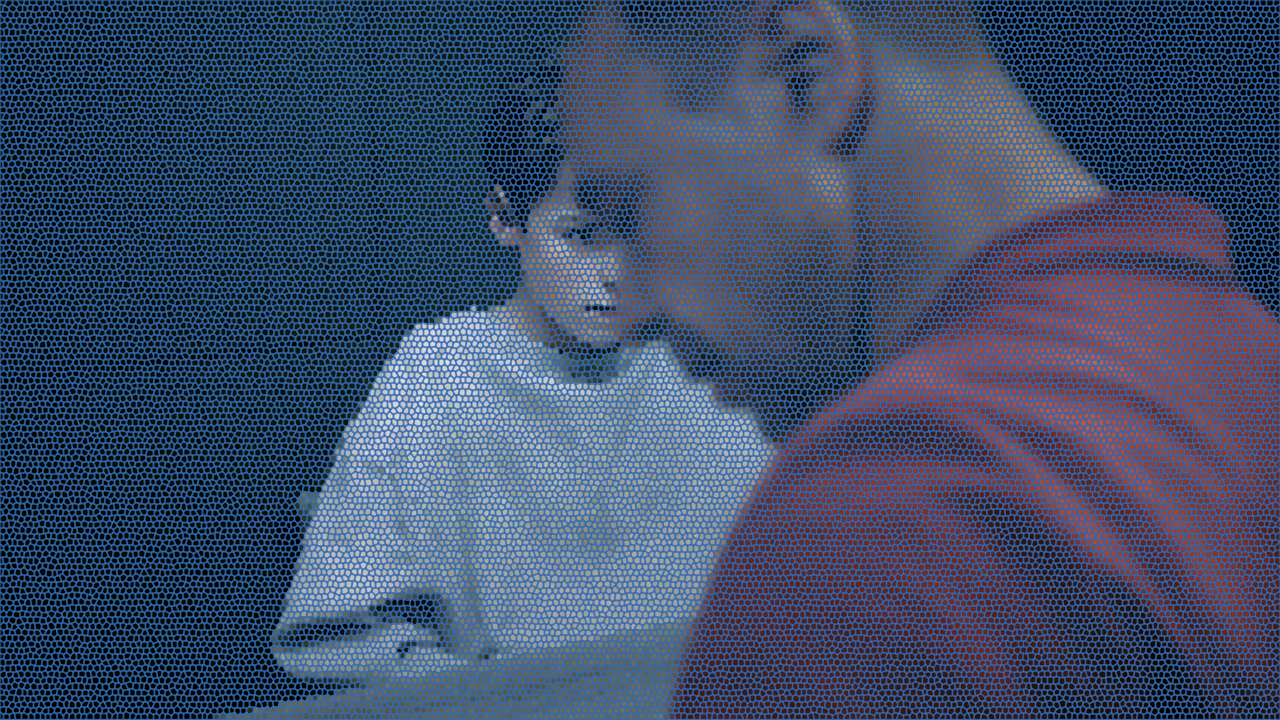


ARTE’s “KIDS” documentary series offers an exploration into both milieu and inner worlds of, y’know…. kids! A mix of tasteful cinematography with observational and informed storytelling, KIDS invites us to relive, really, all those childhood’s fears & freedom, panick & joy, challenges & awe. And all of that amidst these ultra-fast-revolving realities of today.
A Series Born from Curiosity and More Importantly… Care.
At its core, ARTE KIDS is a thoughtful look into what it means to grow up in a world that is changing, yet in many ways remains static in how it teaches children to grow within it. Our kids, they show, are equipped for change by nature. Their brains are literally the most flexible and malleable in existence and can handle much and learn a lot. But we adults? We aren’t always as flexible and easygoing, and while it’s rarely anyone’s fault… we—and the social structures we endorse and tolerate—might stand in our children’s way, preventing them from using their potential to live a decent life. And that’s a waste. And that… is non-negotiable.
So the docu-series explores kids, really, for the benefit of us, the parents, and for the broader benefit of our decision-makers—so that we might give our children more of a chance to learn to navigate life successfully. KIDS doesn’t merely document childhood—it examines emotional journeys, social dynamics among peers and in society, and the cultural influences that shape young lives.
True Stories, From All Over Europe.
Episodes such as “The Importance of Friendship,” “Role Models,” “Status Symbols and Identity,” and “School and Learning” capture these themes in really (!) quite intimate 26- to 27-minute segments. Each installment is a vignette into everyday moments—from that panic-meets-dream-meets-clumsiness thrill of first love, to the bittersweet pain of parents separating (also sweet—because often it really is the better option), to the subtleties of body consciousness and sibling bonds. This format, blending sensitivity with much-needed observational detail and narratives that don’t only involve talking heads, but actual kids, allows you to see the world through children’s eyes again, engaging both your heart and mind. Your awareness, really.
To name an episode, “Body Consciousness” starts with the story of a boy who attempted suicide at a young age and lost an arm as a result—after stepping onto a railway track and jumping in front of a train. What an incredibly desperate thing to do for a young person. To want to end life before it even truly begins.
Curiously, and perhaps for the better, perhaps not, the documentary does not explore why he did what he did. We get the sense that this omission might be his own choice—to leave it out entirely because he prefers not to dwell on it. If that question lingers for you, keep in mind that the story is meant to encourage parents to focus on their children’s potential rather than what is lost—or what never was. After all, many children must find new meaning in life after losing a limb. It’s a vulnerable process—there’s grief, there’s stigma, there’s the daunting question of “What now?” And let’s not forget: many children are born physically divergent.
By shifting the focus away from why it happened to how he moves forward, the story reinforces a simple but powerful truth: embracing life fully, despite being different, is what matters. Take heart!
The discomfort of being original
As the episode progresses, we switch gears. A shy, clear-eyed Bosnian teenager shares—in starkly honest terms—how she struggles with being brought up to think she is physically inadequate. The way she describes her difficulty in appreciating her smile, the shape of her cheeks, her hands, her weight, the fact that some people think she looks boyish… it’s all so raw, so real. It puts your heart right next to hers.And then, without warning, you find yourself analyzing your own past, your own inadequacies.
And that’s the thing about a well-told, true story. It becomes ours. And For a moment, I lived this child’s story. I understood her struggle. And I wished she could see herself differently—immediately. But she will. She’s working on it already—by talking about it. And hopefully, someone will help educate her parents to see her differently, too.
I also wondered whether they could watch this and have a change of heart.
Anyway, thanks to the commentary in the episode, I was reminded—again—of my responsibility to my own daughter and the world at large. We set examples. Our children follow.
And if can, we should not take that lightly.
Themes That Resonate in the Digital Age, Filmed and Produced Well.
Other episodes examine how digital life reshapes interpersonal connections. For instance, “The Importance of Friendship” explores how online interactions add to—or complicate—real-life bonds, while episodes on role models and identity emphasize the pressures, inspirations, and traps that the digital realm creates for kids.
And to match the excellent content, the delivery is on point as well. ARTE—a French-German public broadcaster known for its high-quality, advertisement-free programming—creates content with meticulous production values. The camera work is subtle yet evocative, capturing both the exuberance and vulnerability of our kids. The use of natural light, unforced dialogue, and real-life settings creates a documentary aesthetic that feels authentic, unvarnished.
Yes, there are issues. The Franco-German lens can feel, at times, like a limitation, and its perspective can be narrow. But hey—it’s literally their show, they fund it, and they do involve people from all over the continent.
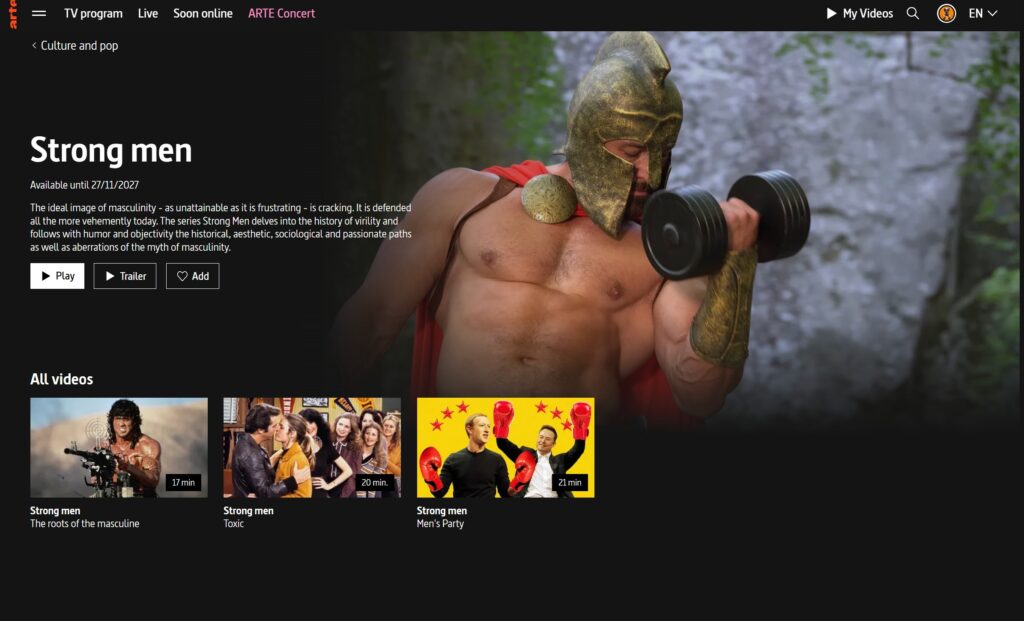
ARTE’s dedication to authenticity and inclusivity is a hallmark of its broader documentary portfolio. And they’re not humorless either! ARTE explores anything and everything—for example, in “STRONG MEN,” we journey into the concept of masculinity and are reminded that “what is appealing” is always evolving. A well-fed Instagram algorithm will do the same, but hey—to each their own source.
For those already familiar with ARTE, KIDS contributes to its reputation as a reliable source of insight in Europe. And accessibility has improved: it used to be far more difficult to access ARTE content, but now audio and subtitles are available in multiple languages—Spanish, English, Polish, French, German, Italian. There’s an ARTE app for every device too, so feel free, and it is free!
WATCH
So, whachu waitin’ for? Find the series on arte.tv or watch on YouTube, or dowload the app and stream from your phone to your TV. With KIDS ARTE delivers a docu-series with a uniquely empathetic and European perspective, in good quality and in more and more languages.