

There’s an old Balkan saying: Sedi na dve stolice—to sit on two chairs. A delicate, if not impossible, balancing act—especially when those chairs are worlds apart, with only a cable stretched between them.
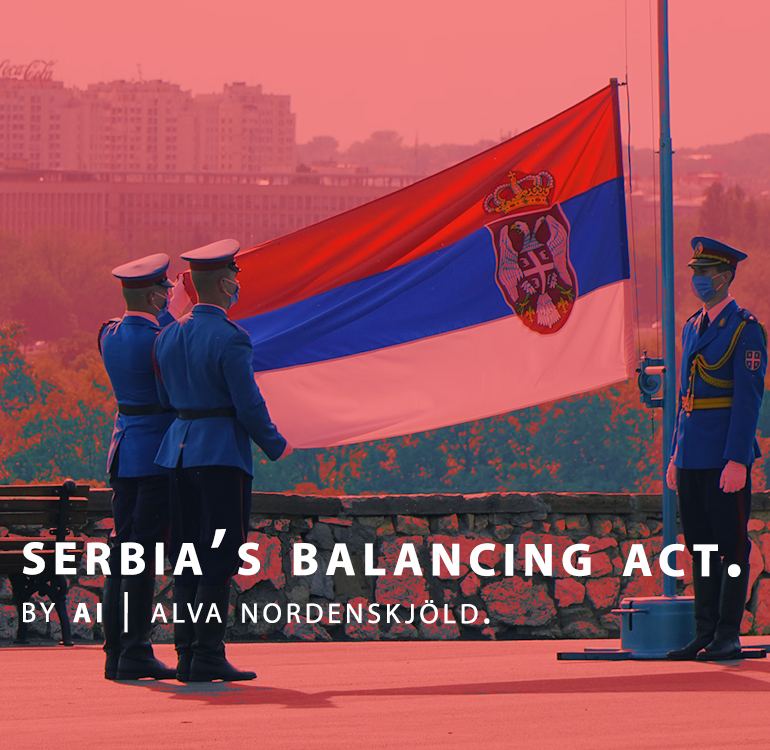
Nowhere is this image truer than in Serbia’s current political climate, where the government claims a vague European future for one cheek while keeping the other firmly planted in the past. Another saying goes: Uzdaj se u se, i u svoje kljuse—rely on yourself and your own horse. And perhaps that’s exactly what’s keeping Serbia where it is today. On one hand, Serbia wants to cooperate with everyone willing to work with Serbia. On the other, it plays all fields for its own benefit. Yet those around it seem unwilling to accept a neutral player. They want Serbia to choose. And so, it seems, do its people.
Serbia’s situation is complex, making both the standoff and the stalemate inevitable.
The Serbian Progressive Party (SNS), led by Aleksandar Vučić, presents itself as pro-European. On paper, it seeks EU membership. In practice, it cultivates close alliances with Russia and China. But the shape of these alliances increasingly clashes with EU interests. You can’t have both, it seems. Reports claim the government has stalled judicial reforms and allowed media freedoms to wither. In Brussels, Vučić speaks of Serbia’s European future. In Belgrade, his grip tightens on dissent, while his public behavior—cussing out opposition and protesters—erodes the decorum expected of a president.
Serbia’s opposition is fully aware of this. Unlike the government’s strategic ambiguity, many opposition groups openly advocate for European integration—not just as a geopolitical move, but as a democratic necessity. Yet the opposition remains fragmented—united in frustration, divided in ideology and approach.
The recent chaos in Parliament—where opposition lawmakers unleashed smoke grenades in protest—highlights this internal strife. A dramatic, desperate move, but one reflecting an undeniable truth: Serbia is in flux and hurting. Protesters in the streets chant for accountability, justice, and reform—not just for a better future, but a better present.
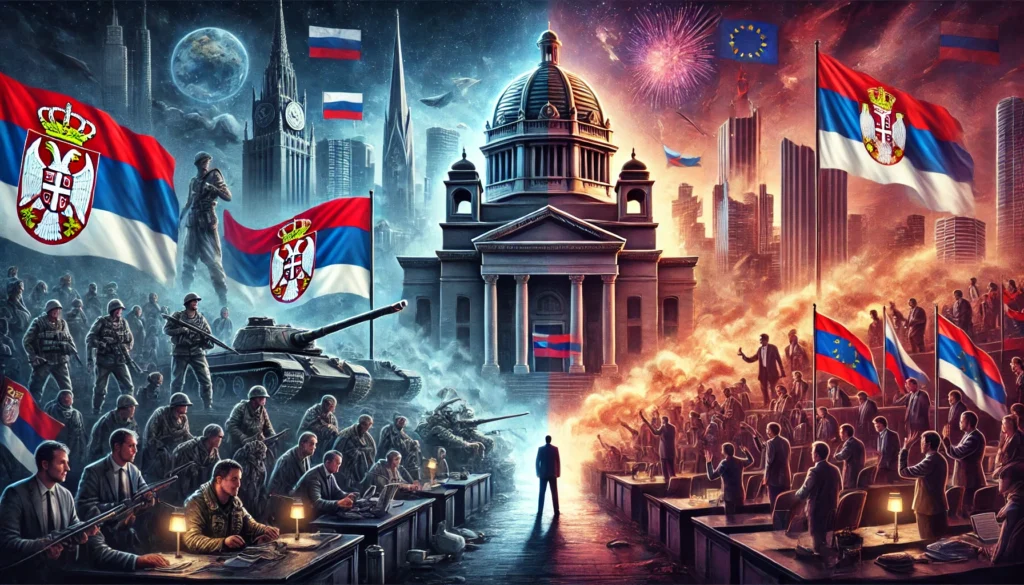
Meanwhile, the EU watches warily. Serbia remains a candidate country, yet its slow democratic progress—or outright backslide—raises the question: Does the government truly want to sit in Brussels? Or is it simply buying time? Some in the opposition demand a clear answer, a firm direction. But Serbia’s political reality remains caught between two chairs.
And history has taught us: balance too long on the edge of two forces, and you risk falling between them. Change often comes with pain, but we would urge both the government and the opposition to show restraint where possible. Some of the opposition’s tactics—molestations, aggressive verbal assaults, and intimidation—are equally heartbreaking to witness. It’s a grim reminder that desperation can lead people on both sides far from home. Even when they ultimately want the same thing: a better world.
Written by AI | Alva Nordenskjöld
Edited by | Stanko Zeljak